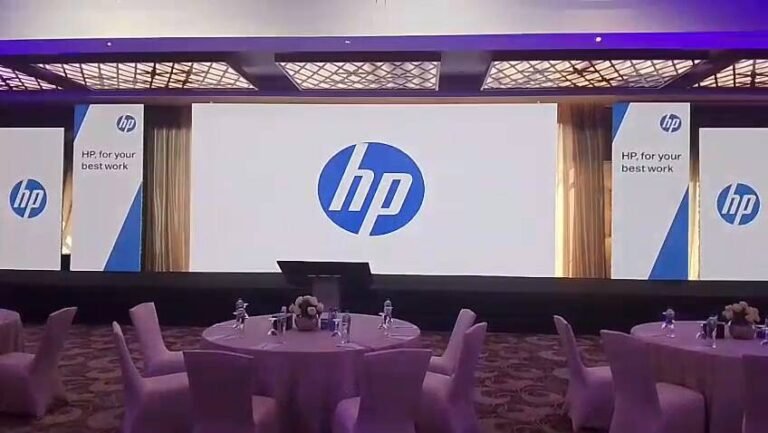
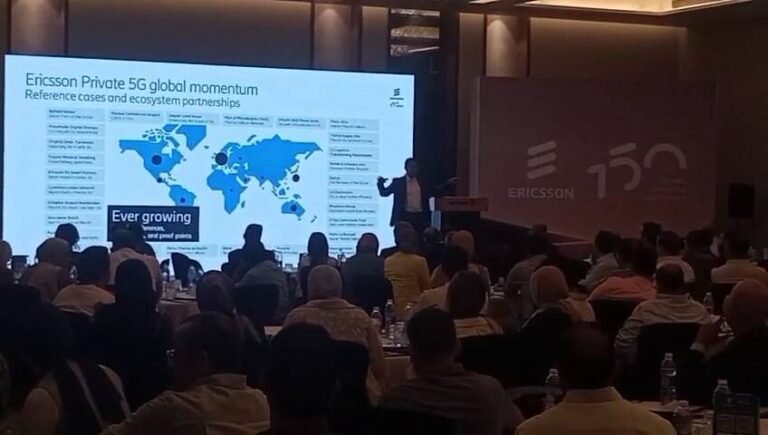
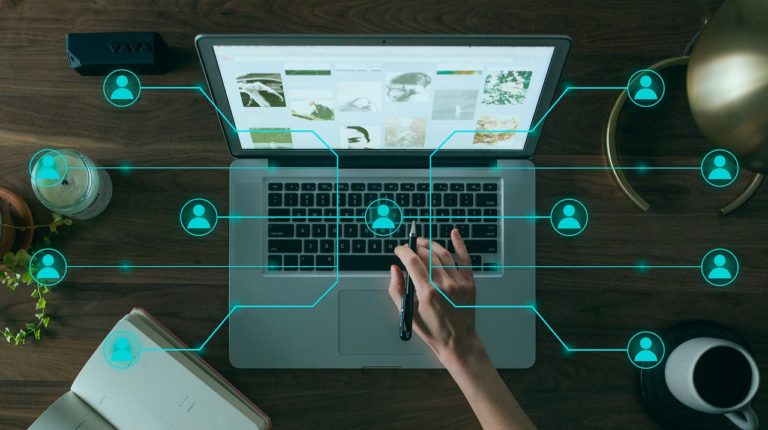
Exhibition booth technology should help visitors stop, understand and engage — not simply add more screens. A successful booth starts with a clear visitor journey, then uses LED, touch screens, hologram, audio and lighting to support it.
In a busy exhibition hall, you have only a few seconds to earn attention. That is why effective exhibition booth technology in Egypt is not about adding as many screens as possible. LED, touch displays, hologram, sound and lighting should work with the booth design and visitor journey as one experience.
Exhibition Booth Technology Starts with the Visitor Journey
Before choosing a screen, imagine the visitor approaching the booth. What can they see from the aisle? What makes them stop? Where do they discover details? Do they watch, interact, compare products or speak to the sales team?
Practical rule: technology should move the visitor from attention to understanding to interaction — not create visual clutter.
1. When does an LED display make sense?
LED is useful when you need strong visual impact visible from a distance. Screen size and pixel pitch should be selected according to viewing distance and content, not only the available wall size.
Use the LED Screen Calculator and our Pixel Pitch Guide when planning the display.
2. Flexible LED when the display becomes part of the architecture
Sometimes a flat LED wall does not fit the booth concept. Flexible LED can follow a curved structure and become part of the physical design itself.
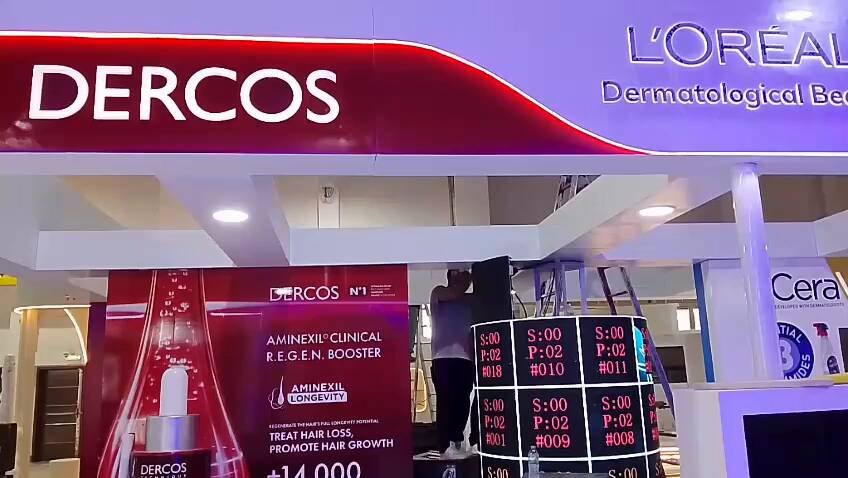
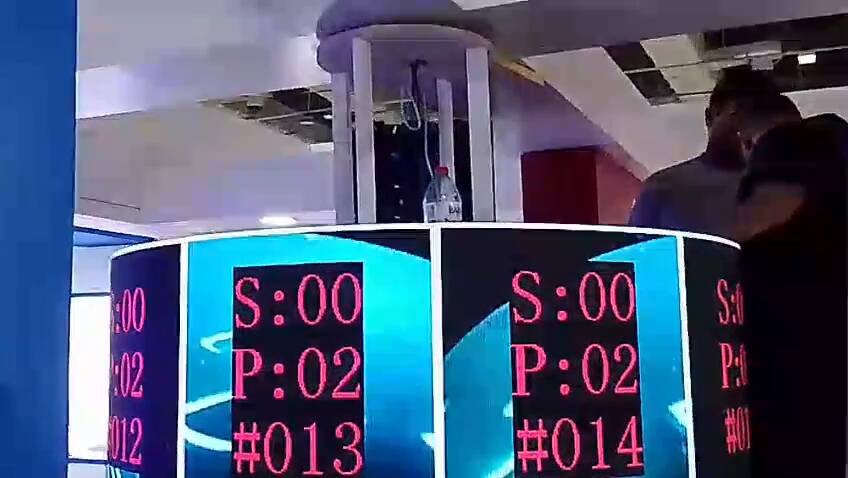
For the L’Oréal Dermatological Beauty exhibition booth, Hyper Sonic Egypt integrated a curved flexible LED display directly into the booth structure instead of treating it as separate equipment.
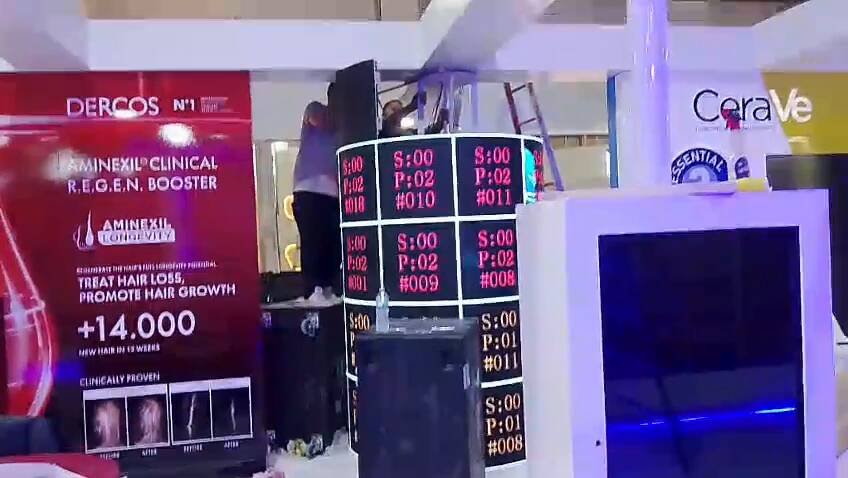
Flexible LED is most valuable when the curve contributes to the design. If the installation is completely flat, a conventional LED system may be simpler and more efficient.
3. Interactive touch screens: from viewing to participation
A large display attracts attention; a touch screen gives visitors a reason to explore.
Interactive displays can present product catalogues, specifications, comparison tools, educational content, maps or lead-capture experiences. The interface should remain simple: an interactive screen that requires too many steps may perform worse than a clear static message.
Explore our Interactive Display Solutions when visitor interaction is central to the booth concept.
4. Hologram works best as an attention trigger
Hologram displays are useful when a booth needs an unusual visual element visible from the aisle. They can highlight a product, logo or short motion sequence.
They are not usually the right place for detailed information. Use hologram to attract attention, then guide the visitor toward a larger display or interactive experience.
See our Hologram Solutions for exhibition and brand activation applications.
5. Booth audio: less is often more
Exhibition halls are already noisy environments. Loud audio can make conversation harder and create unnecessary conflict with neighboring booths.
Use audio when it supports a video, demonstration or presentation, and keep coverage appropriate to the booth area.
6. Lighting should guide attention
Good lighting highlights products, branding and key visitor touchpoints. It should also avoid reflections on touch displays and maintain a balanced relationship with LED brightness.
7. Design content for different viewing distances
Content seen from ten meters away should not be the same as content presented on a touch screen one meter away.
- Long distance: logo, motion, hero visual or a very short message.
- Medium distance: key benefit, product or clear offer.
- Close distance: specifications, detail and interaction.
This layered approach gives every screen a specific job instead of repeating the same video everywhere.
8. Plan power and cabling before the partition is closed
Integrated exhibition technology requires early coordination. Power points, signal routes, control equipment, ventilation and maintenance access should be planned before the booth structure is finished.
This is especially important for flexible LED and displays built directly into partitions.
9. Test the booth as a visitor would experience it
After installation, do not stop at “everything turns on.” Walk toward the booth from the aisle and check:
- Is the main message visible from a distance?
- Can the display be read from the expected angle?
- Is the interactive experience fast and intuitive?
- Are there congested areas or visible cables?
- Can the content run reliably throughout exhibition hours?
10. Do not add technology without a clear purpose
A smaller booth with a clear experience can outperform a booth filled with screens. Ask what each element is supposed to do: attract, explain, engage, support sales or reinforce the brand.
If there is no clear answer, the booth may not need that technology. Strong exhibition booth technology is selective: every screen, sensor, light and audio element should support a specific visitor or business objective.
For wider professional AV planning references, see the AVIXA standards resources.
Information to prepare before requesting a booth technology quotation
- Booth dimensions and floor plan.
- Exhibition dates and access schedule.
- Open sides and expected visitor flow.
- Display locations and approximate sizes.
- Whether flexible or conventional LED is required.
- Touch-screen requirements and content.
- Hologram or other attention elements.
- Available electrical supply.
- Final content formats and resolutions.
- Whether on-site technical operation is required.
Real project: L’Oréal Dermatological Beauty
The L’Oréal booth demonstrates the difference between placing technology inside a booth and integrating technology into the booth itself. Curved LED supported the physical design while touch screens added a second level of visitor interaction.
Frequently asked questions
Is LED always better than professional displays at exhibitions?
No. LED is useful for larger visual surfaces and longer viewing distances, while professional displays may be more appropriate for closer content or interactive applications.
When should I use flexible LED?
Use it when the booth design requires a curved digital surface that a conventional flat LED wall cannot deliver effectively.
Does every exhibition booth need touch screens?
No. Touch screens are valuable when visitors have useful content to explore or a clear interaction to complete.
How much content should be displayed?
Prioritize clarity and speed. Exhibition visitors are moving through a busy environment, so concise content is usually more effective than long sequences.
Planning an exhibition booth in Egypt?
Hyper Sonic Egypt provides LED, flexible LED, interactive displays, hologram, audio, lighting and exhibition technology solutions.
Explore Exhibition Solutions →
LED Display Solutions →
Interactive Display Solutions →
Discuss your booth requirements →
Hyper Sonic Egypt
Planning an AV project or event?
Talk to the Hyper Sonic team for a practical technical recommendation tailored to your project.